Most searches for “email marketing strategies” start from the same place: a campaign that used to perform, and now doesn’t. The fixes that usually help are structural — list quality, segmentation and automation — rather than a cleverer subject line. In Malaysia, where WhatsApp sits alongside email in most people’s daily routine, there’s also a real opportunity to let the two channels do different jobs across the customer journey, rather than asking email to carry every kind of message on its own.
Why Open Rate Isn’t the Number to Chase
Open rate is usually the first number people check, and it’s also one of the least reliable. Apple Mail Privacy Protection registers an “open” for a large share of Apple Mail users whether or not they actually read the email, which is part of why open-rate benchmarks vary so much across platforms. Click rate is a more useful signal, since it depends on the recipient actually acting. Click-to-open rate — clicks as a share of opens — is a further useful check, since it isolates content and offer performance from list-wide open behaviour. If click rate looks weak once you account for list quality and send frequency, that’s usually worth investigating before testing another subject line.
The Core Strategies That Actually Improve Performance
A handful of changes tend to matter more than clever copy:
- Build the list on consent, not volume. People who opted in are the ones likely to open, click and buy, and using someone’s email address for marketing without consent can also put a business at odds with Malaysia’s data protection and direct-marketing requirements — worth checking your opt-in and unsubscribe process against current rules.
- Segment by behaviour, not just demographics. A smaller, more relevant send generally outperforms a broadcast to the whole list, because the content matches where the recipient actually is in their journey — a first-time buyer and a lapsed customer rarely need the same email.
- Automate around behaviour, not a calendar. Welcome sequences, cart reminders and win-back emails are triggered by what someone does, which is usually why they outperform one-off newsletters sent on a fixed schedule regardless of where each recipient actually stands.
- Personalise beyond the first name. Referencing what someone bought, browsed or clicked tends to lift engagement more than a merge-tag greeting, because it signals the email was actually built around that person’s behaviour.
- Design for mobile first. With most browsing happening on a phone, a short subject line, one clear call to action and fast-loading images tend to matter more than visual complexity.
- Treat subject lines and send-time testing as optimisation, not strategy. A well-timed email to the wrong segment can still underperform a plainer email to the right one.
- Keep the list clean. Removing consistently inactive subscribers protects deliverability and keeps engagement metrics meaningful, even though it shrinks the list on paper.
How Email and WhatsApp Complement Each Other
Email suits scheduled, considered communication — newsletters, offers, nurture sequences — where the reader can act in their own time. WhatsApp behaves differently: it’s built for short, immediate exchanges, and Malaysia has one of the highest WhatsApp penetration rates in the world. Independent analyses of DataReportal’s 2026 data put usage at well over 90% of the country’s internet users, which is part of why so much everyday commercial conversation in Malaysia already happens there rather than in an inbox. That reach tends to make WhatsApp well suited to order updates, delivery confirmations and genuinely time-sensitive offers — messages people expect to see quickly — while email keeps doing the job it’s built for: content that benefits from more space and can wait until the reader has a moment. The same consent principle applies here: a WhatsApp broadcast list should be opt-in, just like an email list, and used sparingly enough that it stays useful rather than becoming another feed people mute.
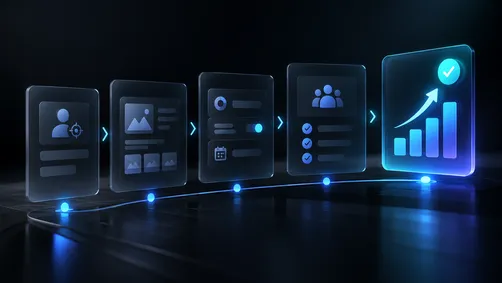
A simple version of this across a customer journey:
- A welcome email introduces a new subscriber and sets expectations.
- If they add something to cart but don’t check out, an abandoned-cart email follows up.
- Once an order is placed, a WhatsApp message confirms it and shares delivery updates.
- Weeks later, a follow-up email re-engages the customer with a relevant offer rather than a generic one.
Connecting Email, WhatsApp and CRM
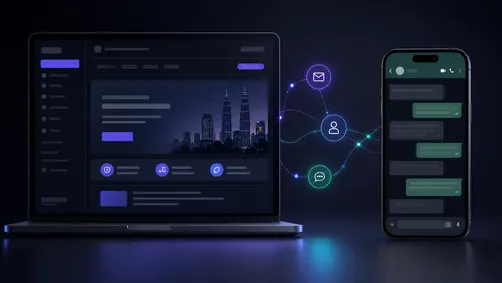
The risk isn’t using both channels — it’s using them without visibility into each other. A customer who gets the same offer twice, once by email and once on WhatsApp, or who keeps receiving a WhatsApp automation after converting through email, is usually a sign the two channels aren’t sharing data. A CRM that both feed into helps prevent that duplication and makes it possible to see a customer’s actual journey rather than two separate channel reports. It also keeps lead-quality data connected, so a lead that started on WhatsApp and converted through an email offer doesn’t look like two disconnected outcomes in two separate reports — which matters when the goal is qualified leads and revenue, not channel-level activity for its own sake. This is the kind of connection customer engagement solutions are built around, and it often overlaps with the automation and system integration work that ties an email platform, WhatsApp Business tooling and CRM together.
Measuring What Actually Matters
Comparing email and WhatsApp on their own metrics — open rate against read rate, click rate against reply rate — doesn’t tell you much, since the two aren’t measuring the same behaviour. Tagging campaigns consistently, such as UTM parameters for email and a simple source tag for WhatsApp, makes downstream tracking possible in the first place, rather than something reconstructed after the fact. A more useful question is what happened after that: did the sequence lead to a qualified lead, a completed purchase, or a returning customer. Channel metrics are diagnostic; commercial outcomes are the real test.
Not sure whether an underperforming email programme is a segmentation gap, an automation gap, or a channel-visibility problem? That’s usually easier to see once you look at where the customer data actually sits, rather than testing another subject line.