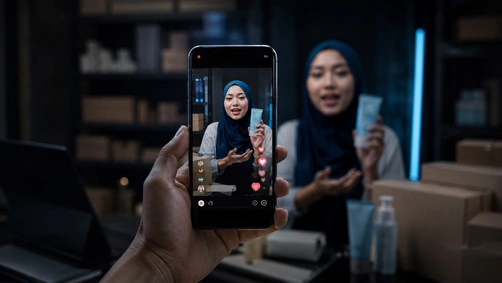
On 24 September 2026, ChatGPT Ads switched on in Malaysia. Two of MRVS’s own articles this month said the opposite — that Malaysia wasn’t on OpenAI’s market list yet. That’s no longer true, and this time the change is worth acting on rather than just monitoring.
What OpenAI Actually Announced
OpenAI confirmed on 23–24 September 2026 that ChatGPT Ads has expanded into seven new Asian markets in one move: Malaysia, Singapore, Indonesia, the Philippines, Thailand, Vietnam and Taiwan. Combined with earlier launches in Australia, New Zealand, Japan, South Korea and India, ChatGPT Ads is now live in more than 60 countries. OpenAI says the ad platform reached a $1 billion annualised revenue run rate within 200 days of launch, with “tens of thousands” of advertisers already using it globally.
The mechanics carried over from other markets rather than changing for this launch:
- Ads appear only to users on ChatGPT’s Free and Go plans. Plus, Pro, Business and Enterprise subscribers remain ad-free. ChatGPT Go costs around RM24 a month in Malaysia, so this covers a meaningful share of everyday users, not a small edge case.
- Ads are shown only to users aged 18 and over, are clearly labelled as sponsored, and OpenAI states they do not influence ChatGPT’s own responses. Conversation content isn’t shared with advertisers.
- Placements are context-relevant — OpenAI’s own example is a user researching a Bali trip seeing accommodation ads — rather than blanket, unrelated placements.
- Businesses can access the platform three ways: OpenAI’s own Ads Solutions team, global agency partners (dentsu, Havas Media, Omnicom Media, Publicis Groupe and WPP all named), or self-serve through Ads Manager, which OpenAI specifically says is now open to “smaller businesses that can create and manage campaigns directly.”
The Shopee Detail Malaysian eCommerce Sellers Should Notice
Buried inside the regional announcement is a detail that matters more locally than the headline number: Shopee is a named partner in this specific expansion, extending a collaboration with OpenAI that started with ChatGPT Ads’ Brazil launch. Shopee’s own statement frames the goal as helping sellers grow while improving how ChatGPT surfaces products during a shopper’s buying journey. OpenAI and Shopee haven’t published the technical detail of how that integration works, but the direction is consistent with what’s already happened elsewhere this year — ChatGPT Ads increasingly plugs into the commerce platforms merchants already use, rather than asking them to build a separate campaign from scratch. Given how central Shopee already is to Malaysian online retail, this is worth watching closely even before the mechanics are fully public.
What’s Confirmed, and What Isn’t Yet
Confirmed: the launch date, the seven-market list, the Free/Go-only placement, the three access routes, the Shopee partnership, and the $1 billion run-rate figure all come directly from OpenAI’s own announcement and were corroborated by Malaysian and regional trade press covering the same launch.
Not yet confirmed: OpenAI hasn’t published pricing, bidding models (CPC, CPM or otherwise) or specific eligibility criteria for self-serve Ads Manager access in these new markets. “Smaller businesses” is OpenAI’s own phrase, without a defined spend threshold or account requirement attached to it. Measurement and reporting capabilities available at launch in Malaysia specifically also haven’t been detailed. Any business evaluating this now should treat early cost and performance benchmarks as unknown rather than assume they’ll resemble Google or Meta.
What This Means for Malaysian Businesses
This changes the conversation from “should we monitor this” to “should we test this,” but it doesn’t automatically mean reallocating budget today. ChatGPT Ads is a genuinely new customer-acquisition surface for Malaysian businesses — one where people are actively researching, comparing and asking for recommendations, often earlier in a decision than a typical Google search. That’s valuable territory, but it’s also unproven at the market level: there’s no local performance data yet, no established benchmark cost-per-lead, and no track record for how Malaysian audiences respond to ads inside ChatGPT specifically.
The businesses likely to get the most out of testing early are the ones already running disciplined paid media elsewhere — clean conversion tracking, a CRM that can tell a genuine lead from a browsing session, and the internal capacity to treat this as a proper test with a defined budget and a clear read on results, rather than an ad-hoc experiment nobody reviews. Businesses without that groundwork in place risk spending against a platform they can’t measure properly, which tells them very little either way.
What Malaysian Businesses Should Do Now
- Decide on an access route before doing anything else — self-serve Ads Manager suits a business that wants direct control and has the internal time to manage a new platform; an agency or technology partner suits one that wants ChatGPT Ads run alongside existing Google Ads, Meta Ads or TikTok Ads campaigns rather than as a separate silo.
- Check conversion tracking and lead-source attribution are solid before spending here. A new platform with no established benchmarks is the worst time to be guessing whether a conversion is real.
- eCommerce sellers on Shopee specifically should watch for more detail on the Shopee–OpenAI integration, since it may end up being the more direct route into ChatGPT Ads for product-based businesses than a standalone campaign.
- Start with a defined test budget and a specific question to answer — cost per lead, cost per click, or assisted conversions against existing channels — rather than an open-ended spend with no comparison point.
- Separately from paid placements, check how the business is currently described when someone asks ChatGPT to recommend a provider in its category. That visibility was already worth managing before ads existed here, and it now sits directly alongside a paid option in the same product.
How MRVS Can Help
MRVS’s paid media team can now set up and manage ChatGPT Ads campaigns as part of a connected advertising mix, alongside Google Ads, Meta Ads and other platforms already in place — rather than treating it as a separate, disconnected experiment. That means choosing the right access route for the business, getting tracking and attribution right before spend goes live, and reading results against the rest of the channel mix instead of in isolation. For Malaysian sellers on Shopee and other marketplaces, that paid media work connects directly with MRVS’s eCommerce marketing services, so a platform shift like this one gets evaluated as part of the whole sales channel, not a one-off test.
MRVS has been tracking this rollout since OpenAI’s European expansion in August and its platform integrations with Amazon and Shopify earlier this month. The pattern held: each announcement made the eventual Malaysia launch more likely, and businesses that had their tracking and CRM groundwork in order were the ones ready to move when access actually arrived.